

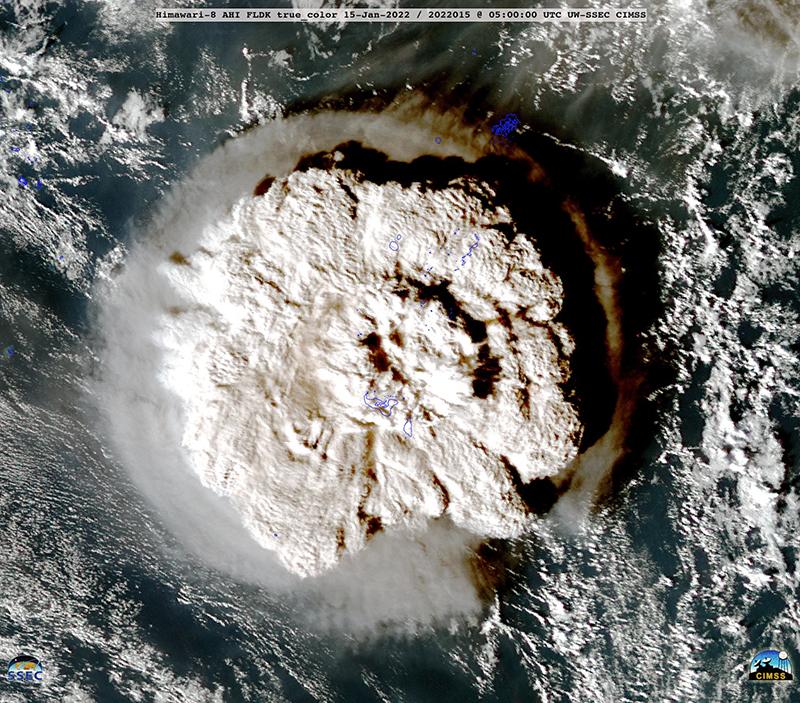
In January 2022, the Hunga Tonga-Hunga Ha’apai volcanic eruption unleashed a tremendous force, sending shockwaves through the atmosphere and affecting weather patterns across the globe. As scientists continue to examine the aftermath of this unprecedented event, new research reveals that the atmospheric effects of the eruption lingered far longer than initially anticipated. With data showing alterations in temperature, air quality, and even precipitation patterns lasting into 2023, experts emphasize the need to understand the complex interactions between volcanic activity and our planet’s climate system. This article delves into the latest findings and their implications for atmospheric science, providing a thorough overview of how one volcanic eruption can ripple through the environment for years to come.
Atmospheric Impact of the Hunga Tonga Eruption and its Lasting Consequences
The eruption of Hunga Tonga in January 2022 unleashed a colossal amount of energy, causing a series of atmospheric changes that would reverberate well beyond the realm of volcanic activity. This cataclysmic event injected approximately 400,000 tons of water vapor and significant amounts of ash and gases into the stratosphere, drastically altering the composition of the atmosphere.Scientists have noted several key atmospheric effects resulting from this eruption,including:
- Increased water vapor levels: The additional moisture has been linked to temporary warming effects.
- Altered global climate patterns: Changes in atmospheric circulation could lead to unusual weather phenomena.
- Impact on ozone levels: The interaction of volcanic gases with the ozone layer may pose long-term environmental challenges.
Moreover, research indicates that the eruption’s impact extends beyond immediate weather disturbances to potentially lasting implications for climate science. Atmospheric scientists are especially concerned about how the eruption interacts with existing climate change models and their predictive capabilities. Notably, preliminary studies suggest that the volcanic ash spread across the globe, resulting in a temporary increase in global temperatures and creating a complex interplay of factors that could affect future climate studies.The table below summarizes the observed changes in atmospheric conditions post-eruption:
| Atmospheric Change | Details | Expected Duration |
|---|---|---|
| Water Vapor Increase | Increased by 400,000 tons | Several years |
| Temperature Rise | Short-term increase observed | Up to 1-3 years |
| Ozone Layer Impact | Alterations in ozone levels detected | Long-term effects uncertain |
Understanding the Climate Implications of Volcanic Ash and Water Vapor
The recent atmospheric effects of the Hunga Tonga eruption have reignited discussions on the complex role of
volcanic ash and water vapor in climate systems. volcanic eruptions release significant quantities of ash,
which can have both short- and long-term climatic impacts.In the immediate aftermath, ash particles can reflect sunlight,
leading to temporary cooling in the lower atmosphere. However, as these particles settle, the situation evolves. Long-term effects can arise from ash chemistry, potentially altering cloud formation and
precipitation patterns. This dual nature of ash—both a cooling and a potential warming agent—makes its study crucial for understanding our planet’s climate balance.
Conversely, water vapor serves as a powerful greenhouse gas, amplifying warming effects in the atmosphere.
The Hunga Tonga eruption injected immense amounts of water vapor high into the stratosphere, where it can persist for
years. Unlike ash, which eventually falls to the surface, any additional moisture can enhance greenhouse warming,
leading to climate complications. Researchers are now closely monitoring changes in water vapor levels as
they relate to temperature anomalies and extreme weather events. Key components to consider include:
- Short-term cooling due to ash reflection
- Long-term warming caused by increased water vapor
- Disruption of local and global weather patterns
- Effects on atmospheric chemistry
| impact | Duration | Effect on Climate |
|---|---|---|
| Ash Clouds | Days to months | Cooling effect |
| Water Vapor | Years | Warming effect |
Recommendations for Future Monitoring and Research on Volcanic Eruptions
the long-lasting impacts of the Hunga Tonga eruption underscore the need for enhanced monitoring systems that can provide real-time data on volcanic activity and its atmospheric consequences. Future research should prioritize the integration of satellite remote sensing technologies with ground-based observations to create comprehensive datasets that enhance predictive modeling. This combination will allow scientists to better understand the relationship between volcanic eruptions and climate variables,particularly in assessing the persistence of ash and gas emissions in the atmosphere.
Moreover, interdisciplinary collaboration is vital for advancing our knowledge of volcanic impacts on ecosystems and human health. Efforts should be made to establish international research consortia that can pool resources and expertise. Along with improved data sharing protocols, these collaborations can facilitate wider studies on the long-term climatic effects observed post-eruption.A focus on the following areas will be critical for prosperous outcomes:
- Assessment of atmospheric circulation patterns influenced by volcanic events.
- Impacts on marine ecosystems as an inevitable result of altered nutrient flows.
- health implications relating to increased particulate matter in the atmosphere.
The Way Forward
the Hunga Tonga eruption stands as a stark reminder of the powerful and lasting impact that natural events can have on our planet’s atmosphere.As scientists continue to study the intricate ramifications of this monumental eruption, they highlight the importance of understanding such phenomena in the context of climate change and environmental stability. The lingering atmospheric effects, observed for years after the event, not only reshape our scientific understanding but also prompt critical discussions about global preparedness for future volcanic activities.As researchers unveil more insights into these atmospheric alterations, their findings will be essential in informing policy decisions and enhancing our resilience against the unpredictable forces of nature.










