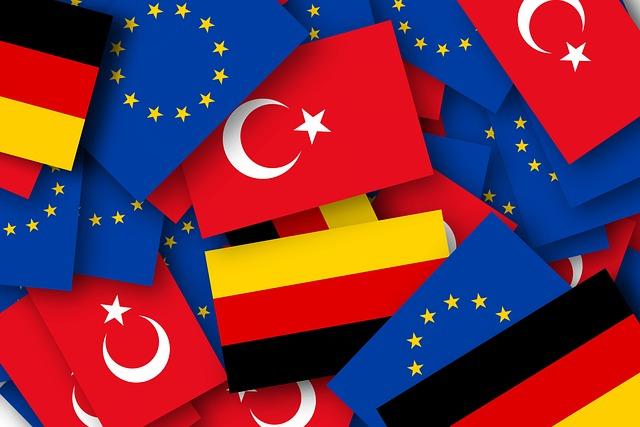
An Outsider Within: Navigating the Paradox of the Europe-Turkey Relationship
In the complex tapestry of international relations, few bonds provoke as much intrigue and contradiction as that between Europe and Turkey. Historically a bridge between East and West, Turkey occupies a unique position on the geopolitical landscape, straddling both European and Asian influences. However,the country’s aspirations for closer ties with the European Union have been marked by a tumultuous journey,characterized by a blend of cooperation and contention.As tensions simmer over issues ranging from migration to human rights, the relationship reveals itself as a paradox – a partnership based on mutual interests yet fraught with underlying distrust. This article, backed by insights from the European Council on Foreign Relations, delves into the complexities of this enduring yet precarious alliance, exploring the factors that define its trajectory and the implications for both europe and Turkey in an increasingly polarized world.
Navigating Tensions: Understanding the Complex Dynamics of the Europe-Turkey Relationship
The intricate relationship between Europe and Turkey is marked by a blend of cooperation and friction, revealing an enduring paradox. On one hand, Turkey serves as a vital partner for Europe, particularly in matters of migration control, regional security, and economic ties. The 2016 EU-Turkey refugee deal exemplifies this partnership, where Turkey agreed to take measures to prevent the flow of migrants into Europe in exchange for financial support and visa liberalization talks. Such cooperation is crucial for Europe’s migration policy and its goal of maintaining stability in the Mediterranean region.
However, underlying tensions continue to challenge this collaboration. Key issues include:
- Turkey’s democratic backsliding and human rights violations,which have raised alarms within EU member states.
- Contentious disputes over energy exploration in the Eastern Mediterranean,exacerbating regional tensions with Greece and cyprus.
- Turkey’s growing ties with non-Western powers, which some view as a pivot away from Europe.
These factors complicate Turkey’s quest for EU membership and highlight the struggle between strategic interests and ideological values within the context of a partnership fraught with contradictions.
Bridging the Gap: Strategic Recommendations for a more Cohesive Partnership
To foster a more cohesive partnership between Europe and Turkey, several strategic recommendations merit consideration. Enhancing dialog should be a priority, focusing on areas of mutual interest such as trade, security, and migration. Establishing regular high-level forums can facilitate open interaction and help build trust, enabling both sides to navigate the complex political landscape with greater ease. Furthermore, launching collaborative projects that engage civil societies and promote cultural exchanges will serve to strengthen ties and counteract prevailing stereotypes.
In addition, investing in joint initiatives that address shared challenges, such as climate change and counter-terrorism, can reinforce the significance of cooperation.Both europe and Turkey will benefit from coordinated efforts in strategic areas, thereby creating a sense of interdependence that paves the way for deeper engagement. cultivating partnerships in technology and innovation can also open new avenues for cooperation, ultimately allowing for a more balanced and complete relationship that reflects the realities of a rapidly changing geopolitical landscape.
Future Directions: Evaluating the Geopolitical implications of Turkey’s Outsider Status in Europe
The unique status of Turkey as a supposed outsider within the European geopolitical landscape presents a myriad of implications that warrant careful consideration. Historically, Turkey has occupied a pivotal role as a bridge between Europe and Asia, creating a complex dynamic characterized by both cooperation and tension. As European nations grapple with thier own internal challenges, including rising populism and economic uncertainty, Turkey’s strategic significance on issues such as migration control and security cooperation grows more pronounced. The country’s influence over energy routes and its significant military capabilities further underscore its importance, complicating europe’s approach to engaging with Ankara.
Moving forward, a thorough evaluation of the geopolitical implications stemming from Turkey’s outsider status is crucial. This includes assessing the potential for reinforced collaborations in areas like counter-terrorism and economic partnerships, alongside possible geostrategic confrontations that may arise from divergent political ideologies. Moreover,the evolving relationship between Turkey and the European Union will likely influence regional stability,particularly concerning the balances of power within neighboring contexts. As the EU considers its future trajectory and the impact of Turkey’s fluctuating alignment, a nuanced understanding of this intricate relationship will be vital for all parties involved.
Wrapping Up
As the relationship between Europe and Turkey continues to unfold, it remains a complex tapestry woven with shared history, mutual challenges, and diverging aspirations. The paradox of being an outsider within reflects not only Turkey’s geopolitical significance but also its struggle for acceptance within the European framework. As both sides navigate the delicate balance of cooperation and contention, the future of this relationship will be crucial not just for regional stability, but for the broader dynamics of international politics. With tensions simmering over issues ranging from migration to human rights, the stakes have never been higher. As Europe reassesses its ties with Ankara, the world watches closely, waiting to see if this longstanding partnership can evolve into a more cohesive and mutually beneficial alliance, or if it will remain mired in complexity and conflict. The coming months will be pivotal, and the implications of these developments will resonate far beyond the borders of europe and Turkey.