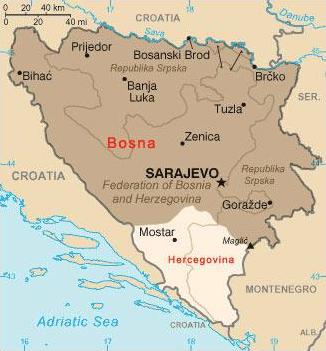
Revisited: Thirty Years After the End of War in Bosnia-Herzegovina, Tensions Remain
As the world reflects on three decades since the cessation of hostilities in Bosnia-Herzegovina, the remnants of conflict persistently echo through the region. The 1995 Dayton Agreement, designed to halt one of Europe’s bloodiest wars since World War II, has struggled to foster the lasting peace its architects envisioned. While Bosnia-Herzegovina has made significant strides towards recovery and reconciliation, deep-rooted ethnic divisions and political tensions continue to complicate its journey toward stability. This article delves into the current state of affairs, examining how the legacies of the past continue to shape the nation’s identity and the challenges that lie ahead in ensuring a unified and peaceful future.
Examining Ethnic Divisions and Political Fragmentation in Post-War Bosnia-Herzegovina
As Bosnia-Herzegovina marks three decades since the end of its devastating war, the landscape is still marred by ethnic divisions that continue to shape its political landscape. The country remains effectively partitioned along ethnic lines, with the Bosniaks, Serbs, and Croats each maintaining their own political entities within a fragile framework established under the Dayton Agreement. This arrangement has, instead of fostering unity, entrenched divisions, allowing political leaders to exploit ethnic identities for their own gain. Among the consequences is a pervasive sense of distrust, as communities gravitate toward leaders who reinforce their ethnic affiliations rather than embrace a national identity.
Despite some efforts at reconciliation and rebuilding, the essential challenges remain: discriminatory practices, inefficient governance, and a pervasive sense of marginalization felt by various groups. The resurgence of nationalistic rhetoric from political figures further exacerbates existing tensions, creating an environment where dialogue and cooperation seem distant ideals. The following table highlights key challenges that impede reconciliation efforts:
| Challenge | Impact |
|---|---|
| Political Corruption | Undermines public trust in governance |
| Ethnic Segregation in Schools | Perpetuates generations of division |
| Fragmented Media | Fosters bias and misinformation |
| Lack of Economic Opportunities | Drives frustration and emigration |
Impacts of Economic Instability on Social Cohesion in a Divided Society
The lingering shadows of economic instability in Bosnia-Herzegovina continue to cast a long shadow over social cohesion, particularly in a society still defined by ethnic divisions. As unemployment rates soar and living standards decline, many citizens feel increasingly disenfranchised, leading to heightened tension among disparate groups. Economic disparities have resulted in a sense of competition for resources, exacerbating long-standing grievances that were never fully resolved. Communities that had begun to cautiously engage with one another are facing renewed segregation, as fears of economic deprivation prompt people to retreat into familiar ethnic enclaves. This retreat fuels stereotypes and deepens divides instead of fostering an environment of collaboration or understanding.
Moreover, the lack of effective economic policies has led to growing frustrations that often manifest in public unrest. The youth, in particular, are feeling this impact acutely; they are struggling to find opportunities in a stagnant job market, resulting in a bleak outlook for the future. Surveys conducted in recent years highlight the disillusionment with the government’s ability to promote equitable growth, leading to an increasing sentiment that their voices are marginalized. This discontent is not only a barrier to reconciliation but also threatens to ignite nationalism as people search for scapegoats rather than unity. Thus, without a concerted effort to address the economic causes of unrest, social cohesion remains a fragile dream amidst a backdrop of uncertainty and division.
Toward Lasting Peace: Recommendations for Reconciliation and Integration Efforts
To foster genuine reconciliation in Bosnia-Herzegovina, it is imperative to prioritize inclusive dialogue among community leaders and marginalized groups. The establishment of consistent forums that bring together diverse voices can help rebuild trust and promote understanding. Key strategies for these dialogues might include:
- Cross-Community Engagement: Initiatives that involve members from different ethnic backgrounds in collaborative projects.
- Education Reform: Integrating peace education and historical awareness into school curricula to dispel long-held biases.
- Support for NGOs: Funding and empowering non-governmental organizations that focus on reconciliation efforts.
Additionally, the focus should extend towards economic integration that addresses disparities among communities. Economic opportunities can significantly aid in fostering unity, particularly through initiatives such as:
- Job Creation Programs: Encouraging investments in mixed communities to ensure equitable job opportunities.
- Small Business Support: Incentives for entrepreneurs from different ethnic groups to collaborate and launch joint ventures.
- Infrastructure Projects: Developing communal spaces that serve all communities, promoting interaction and collaboration.
Future Outlook
As Bosnia-Herzegovina marks the thirtieth anniversary of the end of its devastating war, the echoes of conflict still reverberate through the fractured landscape of its society. Although significant strides have been made towards reconciliation and rebuilding, deep-seated ethnic tensions and political fragmentation continue to pose challenges to lasting peace. The international community watches closely, questioning whether the hard-earned lessons of the past will guide the future or if unresolved grievances will resurface. As local leaders grapple with a divided legacy, the path forward remains uncertain, casting a shadow over the potential for unity in this diverse nation. Bosnia-Herzegovina stands at a crossroads, where the scars of history remind its people-and the world-of the importance of dialogue, understanding, and vigilance in the pursuit of a harmonious tomorrow.