

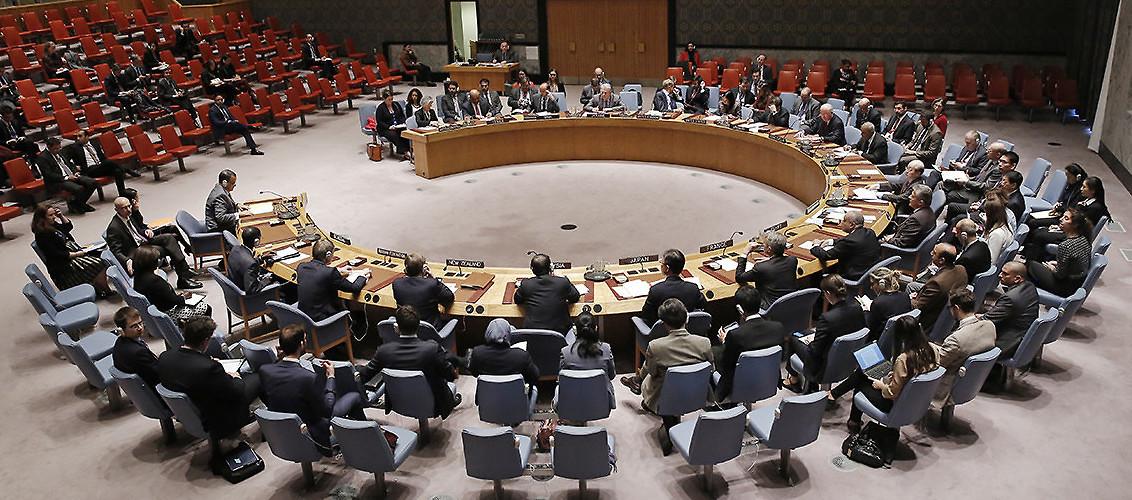
Introduction: The Security Council and the Future of Western Sahara – With a ‘Group of Friends’ Like These…?
The protracted conflict over Western Sahara has long been a focal point of international diplomacy, representing not only a territorial dispute but also a complex interplay of geopolitical interests. As the United Nations Security Council grapples with its role in mediating this contentious issue, the question arises: Can a so-called ‘Group of Friends’ truly facilitate progress, or are these allies merely compounding the challenges faced in finding a resolution? In this article, we will examine the current dynamics at play within the Security Council, the implications of its varied stakeholders, and the changing perspectives of key players involved in Western Sahara. By dissecting the interplay between politics and principles, we aim to illuminate the obstacles that stand in the way of a peaceful solution, all while questioning the effectiveness of a diplomatic framework that seems to falter in the face of entrenched positions. Join us as we explore the complexities surrounding the future of Western Sahara, a territory rich in resources yet marred by decades of tension and uncertainty.
The Role of the Security Council in the Western Sahara Dispute
The United Nations Security Council plays a pivotal role in mediating the long-standing conflict over Western Sahara, a region rich in natural resources yet marred by territorial disputes. Central to the resolution efforts is the involvement of the “Group of Friends,” which consists of key players such as France, Spain, the United States, Russia, and United Kingdom. These nations leverage their political clout to navigate the complex dynamics of the situation, yet their effectiveness has come into question. Critics argue that a lack of consensus among these members often leads to indecisiveness, hindering meaningful progress. The Security Council’s resolutions have not yielded sustainable solutions, leaving many to wonder if the interests of the member states overshadow the plight of the Sahrawi people.
In examining the outcomes of the Security Council’s interventions, it becomes evident that the principles of self-determination and decolonization are often overshadowed by geopolitical strategies. Despite periodic calls for negotiations and a renewed commitment to peace, the council’s actions can at times appear more symbolic than substantive. Key challenges include:
- Geopolitical Rivalries: Disagreements among the permanent members often stall progress.
- Lack of Local Representation: The voices of local Sahrawi representatives are frequently marginalized in discussions.
- Resource Exploitation: Outside interest in the region’s natural wealth complicates the diplomatic landscape.
Although the Security Council remains a significant platform for diplomatic resolution, the palpable frustration among stakeholders calls into question whether these efforts will lead to a lasting and just resolution, or continue to perpetuate the status quo.
Assessing the Efficacy of the Group of Friends in Promoting Peace
The Group of Friends, composed of key international players, has been tasked with fostering dialogue and seeking a resolution in the Western Sahara dispute. However, its efficacy in promoting sustainable peace has come under scrutiny. Critics argue that the group’s approach often lacks the necessary engagement with local stakeholders and fails to address the complex historical grievances that fuel the conflict. Some of the challenges identified include:
- Selective Engagement: The Group tends to prioritize diplomatic channels over grassroots initiatives, sidelining the voices of Sahrawi people.
- Fragmented Strategy: Disparities in member states’ priorities can dilute unified efforts, causing inconsistent messaging.
- Focus on Short-Term Solutions: There is a recurring pattern of seeking quick fixes rather than investing in long-term peace-building mechanisms.
Evidence indicates that while the diplomatic framework established by the Group of Friends has led to some dialogues, it often lacks follow-through. The current trajectory suggests that the status quo is prioritized over transformative solutions, leaving many unconvinced of the group’s commitment to true conflict resolution. To comprehend its effectiveness, a comparative analysis of past initiatives is essential. Below is a table summarizing the outcomes of past Group of Friends’ engagements:
| Engagement Year | Outcome | Local Stakeholder Involvement |
|---|---|---|
| 2007 | Initial Peace Talks | Minimal |
| 2010 | Ceasefire Agreement | Limited |
| 2018 | Reopening of Negotiations | Increased |
| 2022 | Failed Resolution Vote | Nonexistent |
This overview indicates a varied history that requires careful assessment; a pattern of missed opportunities looms large. For peace-oriented efforts to gain traction, it is imperative that the Group re-evaluates its strategies to ensure they are inclusive, contextually sensitive, and bolstered by a commitment to tangible outcomes.
Strategic Recommendations for a Sustainable Resolution in Western Sahara
To foster a sustainable resolution in Western Sahara, it is essential for the international community to adopt a multi-faceted approach that prioritizes both dialogue and development. First and foremost, the Security Council should enhance its mediation efforts by establishing a dedicated task force focusing on peace negotiations. This task force could involve not only the conflicting parties but also regional stakeholders and international actors, ensuring a comprehensive dialogue that captures diverse perspectives. Additionally, the Council should consider:
- Increased funding for socioeconomic initiatives to improve living conditions in the region.
- Implementing confidence-building measures that encourage cooperation between conflicting parties.
- Expanding the mandate of peacekeeping missions to include protection of civilians and facilitation of humanitarian aid.
Moreover, it is crucial to engage the ‘Group of Friends’ in a more proactive manner, holding them accountable for their commitments to the peace process. A transparent framework for collaboration could be established, allowing these states to contribute fairly and consistently towards the goal of lasting peace. Key measures could include:
| Proposed Action | Responsibility |
|---|---|
| Regular progress assessments | Security Council |
| Joint development projects | Group of Friends |
| Monitoring human rights issues | UN Agencies |
By taking these steps, the international community can ensure not only the successful mediation of the conflict but also a framework for ongoing collaboration that prioritizes the welfare and aspirations of the Sahrawi people. It is imperative that all parties involved commit to a long-term strategy that brings stability and respect for human dignity to Western Sahara.
Closing Remarks
In conclusion, the role of the Security Council in the ongoing conflict over Western Sahara remains fraught with challenges and complexities. Despite the formation of a so-called “Group of Friends,” the effectiveness of these nations in advocating for a sustainable and equitable resolution is increasingly called into question. As political dynamics shift and new geopolitical interests emerge, the need for a robust, unified approach to addressing the aspirations of the Sahrawi people becomes ever more pressing. The international community must grapple with the implications of its collective inaction and consider new strategies that prioritize dialogue, uphold human rights, and foster genuine self-determination for Western Sahara. As we look to the future, the possibility of a renewed diplomatic effort presents both a challenge and an opportunity – one that the Security Council and its member states cannot afford to overlook.










