
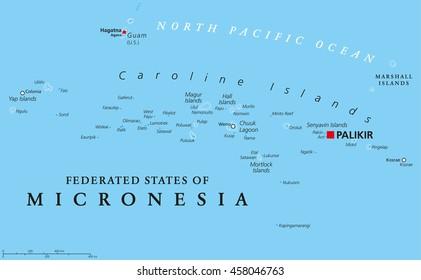
In a significant turn of events for self-determination, advocates in the Federated States of Micronesia are intensifying their calls for the autonomy of the Chuuk islands, an area celebrated for its rich cultural heritage and complex historical ties. As local leaders and grassroots organizations gain traction among citizens, their efforts are drawing international attention, highlighting a broader quest for independence within Pacific regional dynamics. This article delves into the motivations behind this push for independence, evaluating its potential implications on Chuuk’s future and the shifting political landscape in Micronesia.
Growing Support for Independence Amid Political Struggles
The ongoing political turmoil within the Federated States of Micronesia has sparked a surge of activism advocating for Chuuk islands’ independence. Community leaders and various organizations are increasingly vocal about their desire for self-governance, fueled by frustrations over resource distribution and governance from central authorities. The persistent dialogue surrounding economic disparities and environmental challenges has further ignited demands for enhanced autonomy. Key factors driving this movement include:
- Cultural Significance: The Chuuk islands boast a distinct cultural identity that has often been marginalized in national discussions.
- Resource Oversight: Proponents argue that local governance would improve management over abundant natural resources while promoting sustainable practices.
- Youth Engagement: A new generation is actively participating in advocacy through social media platforms to raise awareness and rally support.
The government of Chuuk is beginning to reevaluate its strategies amid these developments, recognizing growing dissatisfaction among residents. Conversations about enhancing local governance frameworks and financial independence are emerging as potential solutions to address calls for greater autonomy. Experts note that while enthusiasm is rising behind this movement, it faces considerable obstacles. A primary concern revolves around possible economic repercussions if independence were achieved; many locals fear losing vital financial aid from central authorities during these politically uncertain times that necessitate careful navigation toward either increased autonomy or full sovereignty.
| Issue | Pro-Independence Arguments | Concerns |
|---|---|---|
| Resource Management | Adequate oversight at a community level | Sustainability issues post-independence |
| Protecting traditional practices & customs | Risking disconnection from wider networks < tr > < td >Political Representation< / td > < td >Increased authority over local matters< / td > < td >Potential governance challenges may arise< / td > < h2 id = "cultural-significance-and-economic-self-sufficiency-in-chuuk" > Highlighting Cultural Significance & Economic Self-Sufficiency in Chuuk Islands< / h2 > < p > As advocacy efforts gain momentum , representatives fromtheChuukislands emphasize bothcultural preservationandeconomicindependence . Activists contendthatcurrentgovernmentalstructuresposeathreatto traditional customs,languages,andpractices.Theybelieveachievingsovereigntywouldenablelocalsto protecttheirrichheritagefromexternalpressures.Initiativesaimedatfosteringappreciationthrougheducationalprogramsandculturaleventsseektoreconnectyouthwiththeirculture.< / p > < p > Advocates also highlight opportunities stemmingfromeconomicself-determination.Theyarguethatuntappedresourcescouldsignificantlyenhancelivingconditionsifmanagedlocallyratherthanunderrestrictivenationalpolicies.Suggestionsinclude:< / p >
|










