
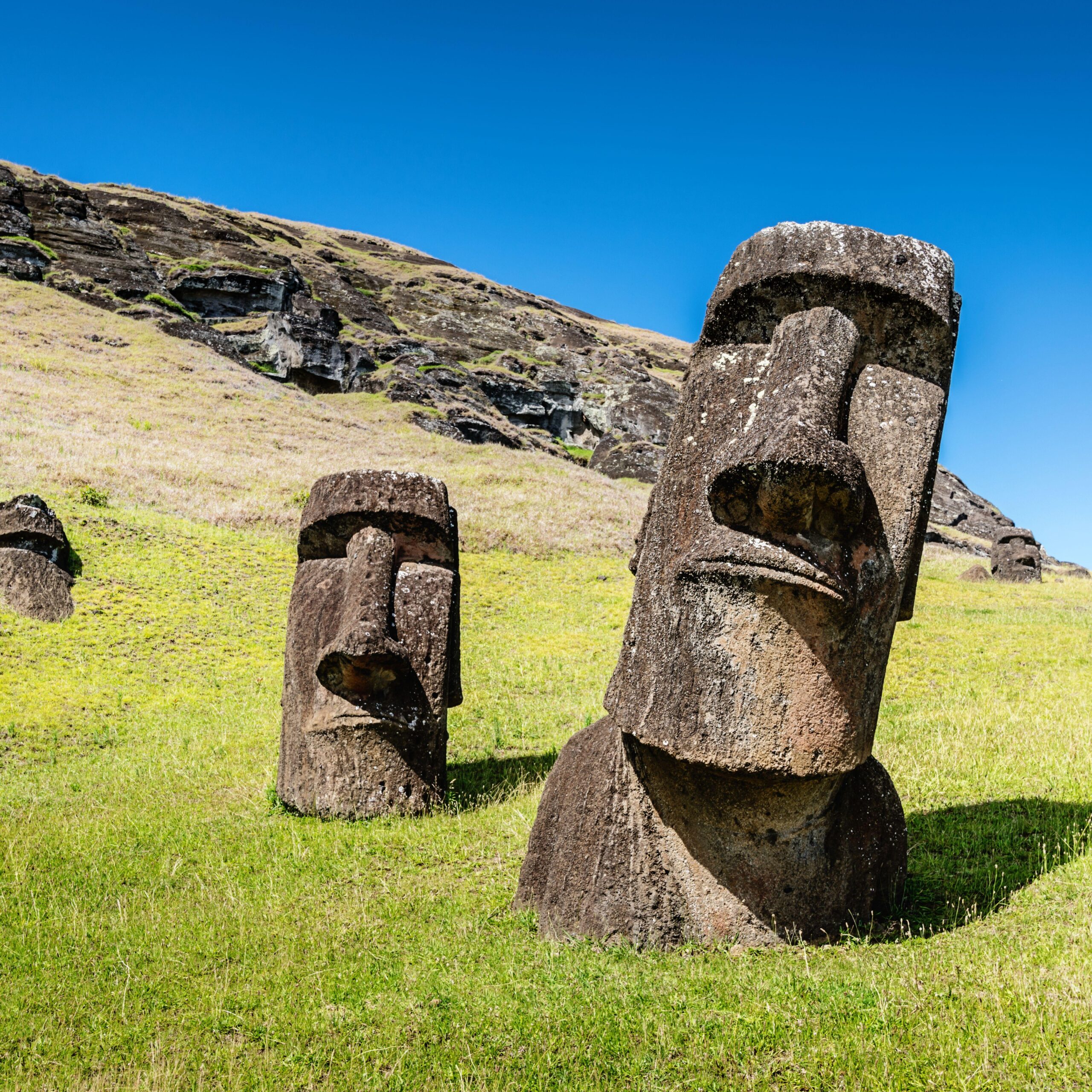
Reevaluating Easter Island: Fresh Perspectives on Its Historical Legacy
Easter Island, renowned for its enigmatic moai statues and isolated location in the South Pacific, has intrigued scholars and enthusiasts for decades. The traditional narrative depicted a once-thriving civilization that succumbed to ecological catastrophe due to excessive deforestation and resource exhaustion. However, recent collaborative studies involving archaeologists and environmental scientists are redefining this long-held view. New findings suggest a more nuanced understanding of the island’s history, emphasizing not only the resilience of its inhabitants but also their capacity to adapt to shifting environmental conditions. This article delves into groundbreaking research that is reshaping our perception of Easter Island while exploring the implications these discoveries have for our understanding of human-environment interactions.
Transformative Research Unveils Easter Island’s Historical Societies
Recent findings from a pivotal study have substantially changed perceptions regarding ancient societies on Easter Island. Once seen as a cautionary tale about environmental collapse leading to societal ruin, new insights reveal a far more intricate reality. By employing advanced radiocarbon dating methods alongside archaeological analysis, researchers have uncovered evidence that challenges the widely accepted notion linking deforestation with the downfall of Rapa Nui society. Instead, results indicate that these islanders practiced thoughtful resource management through sustainable agricultural techniques and adaptive strategies in response to climatic changes.
This research highlights the complex social structures among Rapa Nui people and their cultural resilience. Key takeaways from this investigation include:
- Innovative Agricultural Practices: Evidence suggests they utilized terrace farming and crop rotation methods which ensured long-term food security.
- Community Strength: Strong social networks combined with effective resource management enabled communities to thrive despite facing environmental challenges.
- Cultural Exchange: Findings indicate active trade relationships with other cultures, showcasing a vibrant exchange of goods and ideas.
| Research Focus | Main Discoveries |
|---|---|
| Sustainable Practices | Evident long-term ecological management strategies. |
| Civic Structures | Tight-knit community networks alleviated resource scarcity issues. |
| Cultural Exchange | Diverse trade routes encouraged innovation across societies. |
New Findings Redefine Established Narratives on Environmental Collapse and Population Trends
The latest archaeological explorations into Easter Island have profoundly altered our comprehension of itspopulation dynamics. Historically viewed as an example of rapid ecological failure driven by overpopulation andunsustainable practices leading to deforestation, emerging data presents a much richer picture. Researchers are uncovering signs indicating ecological resilience within island ecosystems-suggesting they had developed effective adaptation mechanisms well before European contact occurred. This challenges previous assumptions about catastrophic declines while raising questions about external influences such as climate change or colonial exploitation in shaping the island’s trajectory.
This revised viewpoint arises from an interdisciplinary approach combining archaeological records with carbon dating alongside environmental assessments revealing key insights:
-
<
- Sustainable Techniques: Evidence shows complex land management through crop rotation systems utilized by Rapa Nui people. << li >< strong >Population Stability: Contrary To earlier beliefs , indications suggest prolonged periods where population levels remained stable , characterized by cycles involving growth followed by recovery .
- Ancestral Agricultural Techniques : Delving into traditional farming methods facilitating sustainable food production processes.
- Resource Management : Investigating conservation efforts undertaken historically amongst rapa nui communities.
- Civic Resilience : Analyzing social frameworks contributing towards survival amidst challenging circumstances posed environmentally speaking.
Additonally leveraging modern technologies alongside indigenous wisdom could yield valuable insights applicable today concerning ongoing sustainability initiatives.
Collaborations involving local populations ensure studies remain culturally sensitive whilst addressing contextually relevant issues.
Examining tourism’s influence upon sustainability endeavors may also provide significant revelations moving forward ; potential focal points might encompass :- Cultural Heritage Tourism : Assessing equilibrium between preserving heritage versus fostering economic development opportunities.
- Climate Change Adaptation Strategies : Investigating adaptive measures taken historically responding effectively towards climatic challenges encountered throughout time periods studied .
- < b >& #xA0 ; Policy Frameworks :& #xA0 ; Evaluating both local/international policies impacting current-day sustainability efforts enacted across islands ‘ landscapes .
Conclusion
The recent discoveries related specifically concerning easter islands’ historical narrative challenge previously held convictions surrounding both societal/environmental collapses experienced amongst ancient inhabitants residing thereon. < br /> These groundbreaking revelations emphasize not only ingenuity displayed but also remarkable adaptability exhibited throughout generations within rapa nui culture showcasing refined agricultural methodologies paired together effectively managing resources sustainably over time spans examined here today! As awareness grows around these updated interpretations it becomes increasingly vital revisiting historical assumptions made previously allowing us greater insight into complexities inherent when navigating relationships shared between humans/nature alike! Ongoing explorations serve reminder history remains dynamic tapestry woven intricately together comprising evidence/interpretation prompting reevaluation necessary regarding connections forged amongst ourselves/natural world we inhabit presently ! For further detailed analyses stay tuned via SciTechDaily platform !
Unlocking Tomorrow: H.E. Ambassador Duarte Lopes Shares Visionary Insights on Europe, North Africa, and the Mediterranean
During a recent event hosted by the Stimson Center, participants delved into a captivating discussion about the evolving relationships between...
Read moreDetails








- Climate Change Adaptation Strategies : Investigating adaptive measures taken historically responding effectively towards climatic challenges encountered throughout time periods studied .
- Resource Management : Investigating conservation efforts undertaken historically amongst rapa nui communities.
<< li >< strong >External Influences : Research indicates important impacts stemming from European colonization played crucial roles affecting local ecology further complicating simplistic narratives surrounding self-destruction .
To illustrate this paradigm shift , consider how traditional narratives differ markedly compared against new findings summarized below :
| Aspect | Traditional Perspective | Emerging Insights
< / tr > < /thead > |
|---|---|---|
| Population Dynamics | Rapid decline attributed primarily towards overpopulation . | Stability marked through cyclical growth patterns . < tr >< td >Environmental Practices < td >>Unsustainable deforestation methods . /< / td >< td >>Implemented sustainable agroecological strategies . /< / td >< tr >< td >>Impact Factors <
Primarily internal (self-destructive tendencies) . Significant external factors (colonization effects & climate shifts) . Future Explorations in Cultural Resilience & Sustainability Practices on Easter IslandA comprehensive approach focusing on interdisciplinary methodologies should guide future inquiries into cultural resilience along with sustainability practices observed within contexts surrounding easter islands’ history. |

