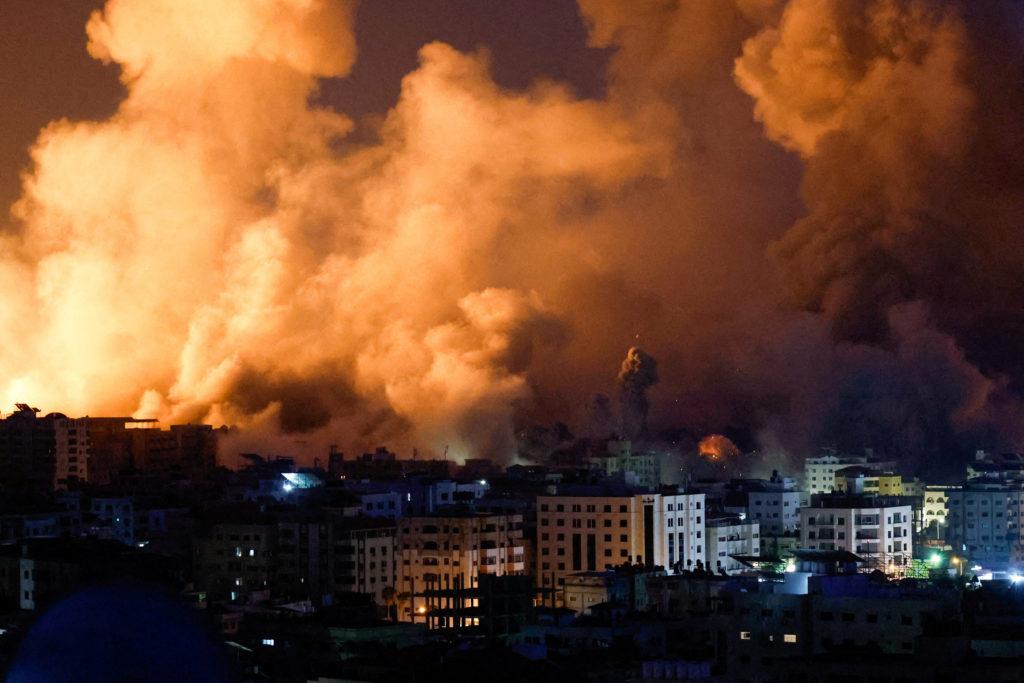
Escalating tensions: Israeli Airstrikes in Yemen and Houthi Retaliation Threats
In a troubling development that has heightened regional tensions, recent airstrikes conducted by Israeli forces in yemen have led to the deaths of four individuals. This incident has sparked immediate backlash from the Houthi movement, a group entrenched in Yemen’s ongoing conflict and backed by Iran. The Houthis have pledged to respond forcefully to what they label as unwarranted aggression. This situation not only highlights the intricate geopolitical rivalries within the middle East but also raises alarms about potential further escalations in an already volatile region. analysts are closely observing how this incident may impact both Yemeni stability and broader regional relations.
Escalation of Regional Tensions Following Israeli Strikes
The recent military actions by Israel against targets in Yemen have intensified existing tensions throughout the region, resulting in notable loss of life and raising concerns among various stakeholders involved in geopolitical dynamics. These strikes appear to be part of Israel’s larger strategy aimed at countering perceived threats from Iranian-aligned factions, including the Houthis, who have increasingly adopted aggressive rhetoric towards Israel. This escalation transcends mere military engagement; it reflects a complex interplay of alliances and hostilities that characterize Middle Eastern politics as nations react with suspicion and hostility towards one another’s maneuvers.
in response to these developments, Houthi leaders have issued strong statements promising retaliation, indicating a likelihood for increased military action. Their commitment to avenge those lost underscores their defiant posture amid external pressures. Experts suggest several critical factors could shape Houthi responses:
- Support Networks: The Houthis may seek assistance from Iran or other allied groups to enhance their military capabilities.
- Domestic Perception: A retaliatory strike could serve to strengthen their domestic standing by portraying themselves as protectors against foreign incursions.
- Global Reactions: The responses from international powers will likely influence their strategic decisions moving forward.
Impact on Yemen’s Conflict Landscape and Geopolitical Rivalries
The recent Israeli airstrikes resulting in fatalities signal a notable escalation within an already complex web of regional conflicts. These events exacerbate Yemen’s ongoing humanitarian crisis while underscoring the fragile balance among local power players. The confrontation between the Houthis—who are vowing revenge—and Israel illustrates broader geopolitical rivalries at play; Iran’s backing positions them within Tehran’s strategy for expanding its influence across the Middle East. With Saudi Arabia and other Gulf nations wary of Iran’s growing presence, there is potential for external powers becoming more deeply involved, complicating an already intricate situation further.
This incident serves as a stark reminder that Yemen is not merely experiencing internal strife but is also caught up in global interests were each faction pursues its agenda often at great cost to civilian lives.The ramifications of escalating violence extend beyond Yemeni borders; they risk igniting wider conflicts involving neighboring countries as international diplomatic efforts struggle for resolution amidst rising tensions.
| Main Actors | Their Stance |
|---|---|
| The Houthis | Aiming for support from Iran while adopting a retaliatory approach towards Israel |
| The State of israel | Carries out strikes aimed at neutralizing perceived threats from hostile entities |
- Potential Increase In regional Instability: These strikes might initiate cycles of violence detrimental to peace initiatives.
< li >< strong > Risk Of Broader Conflict: Escalations may involve additional international actors complicating existing dynamics.< / li >
Diplomatic Strategies To Reduce Violence In The Region
Addressing escalating violence stemming from recent Israeli airstrikes requires comprehensive diplomatic engagement strategies . Stakeholders must prioritize dialog over conflict , utilizing established communication channels among regional players . Key strategies include :
- < strong > Encouraging Backchannel Negotiations:< / strong > Facilitate discreet discussions between Israel & ;the Houthis mediated by neutral parties , establishing frameworks conducive toward conflict resolution .< / li >
- < strong > Engaging Regional Influencers:< / strong > Involve key neighboring states like Saudi Arabia & ;Iran , mediating dialogues addressing core grievances & ;ensuring cessation hostilities .< / li >
- < strong > Humanitarian Initiatives:< / strong > Launch collaborative humanitarian projects alleviating suffering amongst civilians affected regions fostering trust illustrating cooperation beyond militaristic objectives .< / li >
- < strong > International Oversight:< / strong > Propose creation monitoring bodies overseeing ceasefire agreements ensuring compliance reducing risks renewed violence .< / li >
To effectively implement these strategies fostering shared understanding security concerns all parties imperative diplomatic efforts must focus establishing enduring peace frameworks addressing short-term violence long-term political solutions robust engagement plan might resemble:
< tr />< td Expand Humanitarian Access td Increase aid deliveries populations affectedYemenMitigate crises foster goodwill < tr /> Concluding Insights on Recent Developments The latest roundofIsraeliairstrikestargetingYemenresultinginfourdeathsunderscoresrisingtensioninMiddleEastandcomplexitygeopoliticallandscape.HouthishavevowedretaliateindicatingpotentialescalationhostilitiesraisingconcernsforbothYemeni civiliansbroaderregionalstability.AsituationdevelopsinternationalobserverscloselymonitorresponsesfrombothHoutheseIsraeli governmentalongwithreactionsotherregionalpowers.Intricatelyintertwinedlocalinternationaldynamicscontinueinfluenceconflicthighlighturgentneedfordiplomaticeffortstoaddressongoinghumanitariancrisisfosterlastingpeaceinthearea.
Europe’s Bold Pursuit of Epstein: What America Isn’t Telling You
Europe is ramping up its investigation into Jeffrey Epstein's extensive network, while the U.S. appears to be sidestepping accountability. This...
Read moreDetails