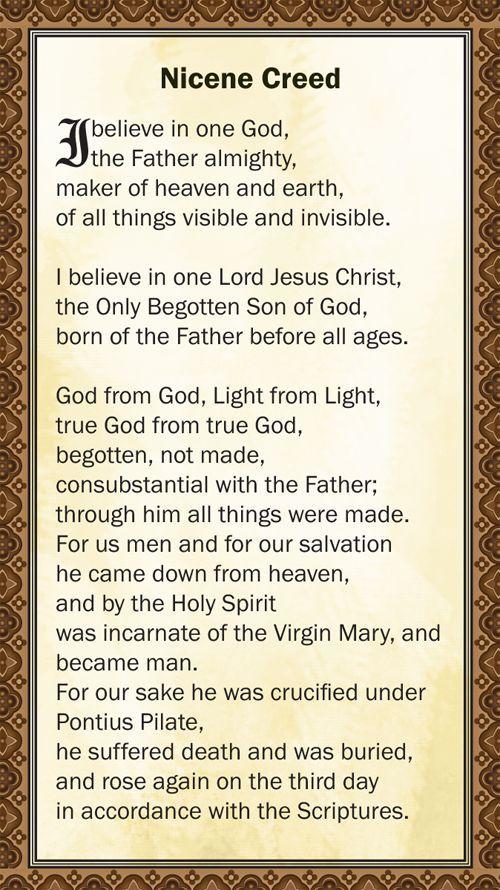
Title: The Nicene Creed: An Enduring Expression of Christian Identity
In an era marked by diversifying beliefs and increased secularism, the Nicene Creed stands as a pillar of Christian identity, uniting millions of believers across diverse denominations around a shared set of core convictions.Formulated in the 4th century during the First Council of Nicaea,this foundational statement of faith articulates the essence of Christian doctrine,addressing key theological controversies of its time. Today, as the global Christian community navigates contemporary challenges, the Nicene Creed continues to resonate, providing a framework for faith and unity among its adherents. Vatican News explores the historical significance, theological implications, and enduring relevance of the Nicene Creed in shaping Christian identity in the modern world.
Understanding the Historical Context of the Nicene creed in shaping Christianity
The Nicene Creed emerged during a pivotal moment in early Christianity, reflecting the theological disputes that were tearing the Church apart in the fourth century. Formulated at the first council of Nicaea in 325 AD, the creed was a direct response to the Arian controversy, which questioned the divinity of Jesus Christ. This historical backdrop not only highlights the urgent need for a unified statement of faith but also illustrates the broader struggle for orthodoxy in a rapidly growing religion contending with diverse beliefs. The creed’s adoption helped in establishing a central doctrine that emphasized the coessentiality of the Father and the Son, fostering a sense of unity and shared belief among Christians across various regions, despite their cultural differences.
Moreover, the Nicene Creed laid the groundwork for future ecumenical discussions and further councils, cementing its role in the evolution of Christian doctrine. The implications of this creed extend beyond mere theological articulation; it served as a tool of identity for the Christian community. The reaffirmation of core beliefs—such as the incarnation,resurrection,and the role of the Holy Spirit—was critical in shaping the communal and ecclesiastical identity of Christianity. This expression of belief not only delineated orthodoxy from heresy but also reinforced the Church’s authority in interpretation and governance, impacting both liturgical practices and personal faith for centuries to come.
The Role of the Nicene Creed in Modern Christian Identity and Unity
The Nicene Creed serves as a notable touchstone for contemporary Christian identity, encapsulating essential beliefs that unite diverse denominations across the globe. This ancient declaration stands as a testament to the core tenets of Christianity, such as the divinity of Christ and the existence of the Holy Trinity.As modern society grapples with increasing secularism and theological fragmentation,the Creed invites Christians to reaffirm their shared faith,promoting a sense of belonging among believers from various traditions. With its roots in the early Church’s struggle for orthodoxy, the Creed is not merely a relic of history but a living statement that resonates deeply with the spiritual aspirations of millions.
In an era where many are seeking common ground amidst divisive cultural landscapes, the Nicene Creed fosters unity by encouraging dialog and cooperation among different Christian communities. The Creed highlights the importance of mutual respect and understanding, emphasizing fundamentals that can bridge doctrinal divides. Through various ecumenical movements,churches are increasingly turning to the Creed as a platform for joint worship and collaborative outreach,demonstrating that despite differing interpretations and practices,a shared commitment to foundational beliefs can inspire collective action for social justice and compassion. A renewed focus on the Nicene Creed may vrey well be pivotal in healing rifts within Christianity and promoting reconciliation both within and outside the faith.
Promoting Engagement with the Nicene Creed for Faith Formation and community Cohesion
The Nicene Creed stands as a foundational declaration of faith for many Christian communities around the globe, embodying essential beliefs that streamline diverse theological perspectives into a cohesive understanding. By fostering an environment where clergy and laity can engage deeply with this historic text, parishes can encourage active participation in the faith journey. Various initiatives can be employed to promote this engagement, including:
- Study Groups: Organizing regular discussions around the Creed that delve into its historical context and theological implications.
- Sermon Series: Implementing a sermon series that highlights each line of the Nicene Creed, allowing worshippers to reflect on its meaning in relation to their lives.
- Community Events: Hosting events that invite families and individuals to explore the creed through art, music, and interactive activities.
- Educational Resources: Providing accessible materials—including pamphlets and videos—that explain the significance of the Creed in everyday faith practice.
Moreover, the Nicene Creed acts as a unifying element that strengthens community bonds among believers. This shared affirmation of faith fosters community cohesion, creating a sense of belonging as parishioners come together in worship and exploration of their beliefs. To further illustrate the impact of the Creed on community life, consider the following insights:
| Aspect | Impact |
|---|---|
| Engagement Activities | Increased participation in church functions |
| Theological Education | Deeper understanding of Christian doctrine |
| Faith Conversations | ongoing dialogue among parish members |
| Outreach Programs | Stronger mission-driven initiatives |
Key Takeaways
the Nicene Creed stands as a profound testament to the foundational beliefs that unite christians across the globe.Its historical significance and theological depth not only reflect the early Church’s efforts to articulate the essence of faith but also continue to serve as a vital touchstone for contemporary Christian identity. As the Vatican emphasizes, reciting the Creed is more than a ritual; it is indeed an affirmation of belief that transcends denominational boundaries, fostering a sense of unity amidst diversity within the Christian community. As we reflect on the enduring relevance of the Nicene Creed, it invites believers to engage actively with their faith, reminding them of the shared heritage and common values that define their spiritual journey.