
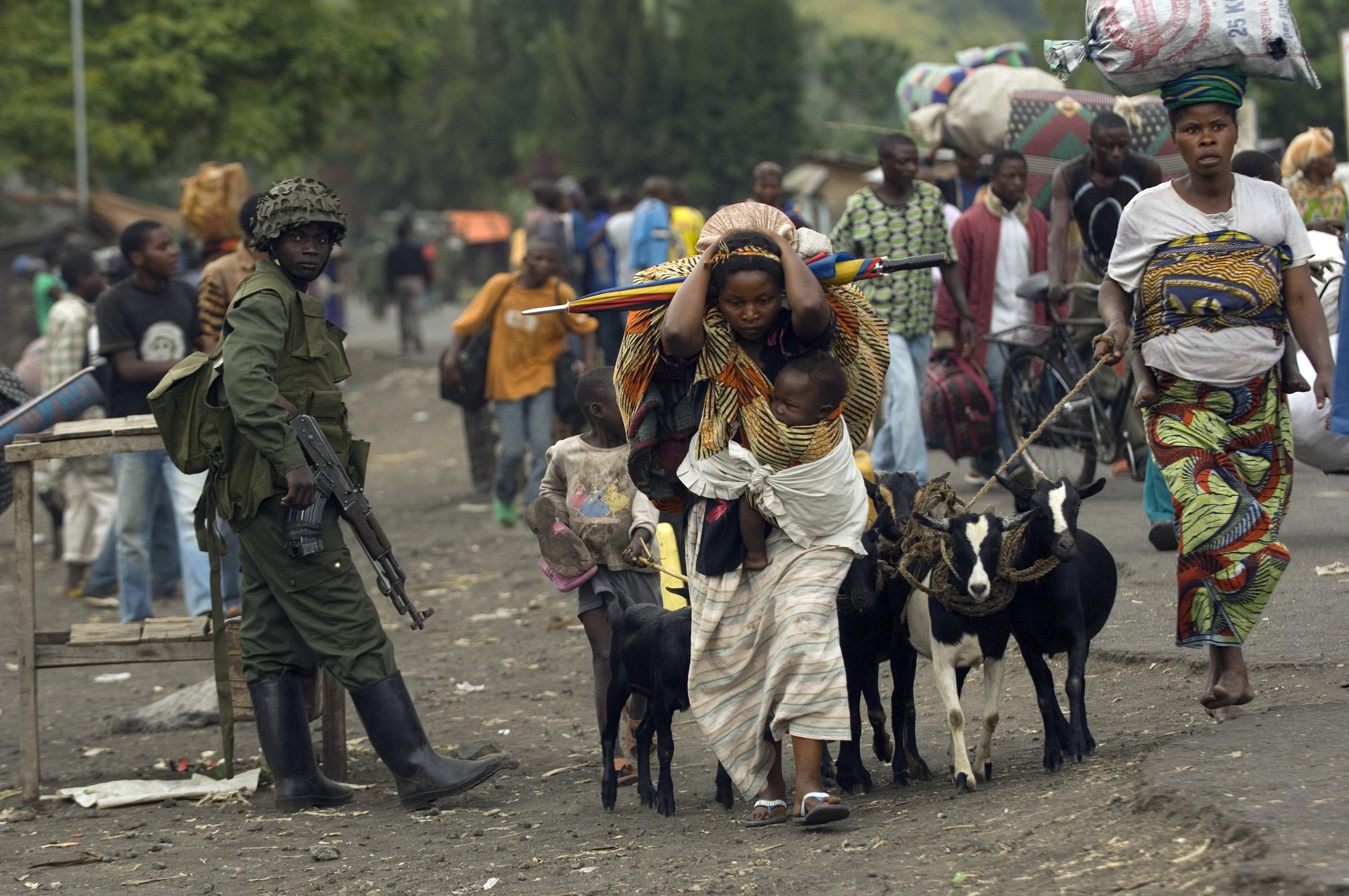
The Democratic Republic of the Congo (DRC) has long been marred by a tumultuous history of conflict that has resulted in one of the most prolonged humanitarian crises in modern times.Despite numerous peace agreements, international interventions, and efforts by various organizations to stabilize the region, enduring violence and political instability have made lasting peace a distant aspiration.This article delves into the intricate web of factors contributing to the DRC’s ongoing turmoil—from the roots of ethnic tensions and economic strife to the proliferation of armed groups and the intricate dynamics of regional politics. As the country grapples wiht the aftermath of decades of strife, understanding the complexities of its conflict is crucial not only for the Congolese people but also for the broader international community striving for peace and security in the region. Why, then, does peace remain so elusive in the DRC? This examination aims to shed light on the multifaceted challenges that continue to hinder reconciliation and stability in one of africa’s richest yet most troubled nations.
Underlying Causes of the DRC Conflict: A Deep Dive into Historical and Socioeconomic Factors
The conflict in the Democratic Republic of the Congo (DRC) has deep roots tied to its colonial past and lingering socioeconomic challenges.The legacy of Belgian colonialism created a framework of exploitation and division that sowed the seeds for future strife. The arbitrary borders drawn during this period grouped diverse ethnicities and communities, leading to long-standing tensions. After gaining independence in 1960, the DRC struggled with political instability, marked by a succession of corrupt leaders and regimes that prioritized personal enrichment over national development. This political vacuum has often been filled by armed groups, vying for control and resources, exacerbating the cycle of violence that defines much of the nation’s recent history.
Socioeconomic factors play a crucial role in the ongoing conflict. vast mineral wealth, including coltan, gold, and diamonds, has been both a blessing and a curse, fostering corruption and fueling armed groups. The struggle for control over these resources has led to violent clashes,not only among local militias but also drawing in foreign interests. Additionally, pervasive poverty, lack of infrastructure, and inadequate access to education and healthcare create a fertile ground for conflict. The widespread disenfranchisement of the population further complicates efforts toward peace, as communities remain caught between competing factions and enduring cycles of violence. Addressing these underlying causes is essential for any sustainable peace process in the region.
The Role of Regional Influences and International Stakeholders in Sustaining Instability
The Democratic Republic of the Congo (DRC) stands at the crossroads of numerous regional and international dynamics, where various actors frequently enough vie for influence, complicating the path to peace. Several neighboring countries have vested interests in the DRC’s rich natural resources, such as minerals critical for the global technology industry, which can lead to a prolonged cycle of conflict. These regional powers engage in practices such as:
- Resource Exploitation: neighboring nations may indirectly support armed groups to secure control over lucrative extraction sites.
- political Interference: Foreign governments can back specific factions to establish proxy influences within the DRC, destabilizing any grassroots peace efforts.
- Refugee and Militant Flows: The DRC’s borders allow for easy movement of militants and refugees, which can exacerbate local tensions and cross-border violence.
International stakeholders, including multinational corporations and foreign governments, further complicate the matter. Their interests frequently enough prioritize economic gain over humanitarian considerations, reinforcing low-level conflicts rather of fostering stability. The consequences of this involvement manifest in various forms, including:
- profit over Peace: Investments are frequently channeled into conflict zones rather than peace-building initiatives.
- Arms Proliferation: The flow of arms into the conflict, often supported by countries with economic interests, escalates violence.
- Inconsistent Diplomacy: International responses can be reactive rather than proactive, leading to a lack of sustained commitment to peace processes.
| Influence Type | Examples |
|---|---|
| Regional Powers | Support for armed groups, manipulation of local politics |
| International Corporations | Resource extraction, profit-driven agendas |
| Foreign Governments | Arms sales, inconsistent diplomatic efforts |
Pathways to Sustainable Peace: Recommendations for Local Governance and Community Engagement
To achieve a lasting resolution to the ongoing conflicts within the DRC, a shift towards inclusive local governance is essential. local leaders, community organizations, and citizens must collaboratively engage in the decision-making processes that directly affect their lives.Establishing community-led conflict resolution mechanisms can empower citizens to take an active role in conflict prevention, promoting dialog over violence. To foster resilience and trust,it is indeed paramount that local governance structures prioritize transparency,ensuring that community voices are not only heard but given weight in governance.
Furthermore, sustaining peace requires a multi-faceted approach that emphasizes community engagement initiatives. These initiatives should focus on:
- Strengthening local economies through job creation and entrepreneurship programs.
- Encouraging inter-community dialogue through cultural exchanges and joint projects.
- Building networks for support and details sharing among civil society organizations.
These efforts can foster a sense of shared identity and collective obligation, essential elements in mitigating conflict. In addition, a partnership approach with national and international actors can provide the necessary resources and technical support to bolster local efforts. By ensuring community members are at the forefront of peacebuilding, the DRC can pave the way for a more sustainable and peaceful future.
The Conclusion
the protracted conflict in the Democratic Republic of the Congo highlights the complexities of establishing peace in a region deeply rooted in historical grievances and modern-day challenges. Despite numerous peace initiatives and international efforts, the interplay of local, regional, and global factors continues to hinder the path toward stability. The persistence of armed groups,economic exploitation,and political instability complicate reconciliation efforts,leaving millions of Congolese citizens in a precarious situation. As stakeholders navigate the intricate dynamics of the conflict, it is crucial for the international community to invest in sustainable solutions that prioritize not just immediate ceasefires but also long-term development and reconciliation. Only through a extensive approach addressing the underlying causes of the conflict can the DRC hope to move toward a peaceful and prosperous future. The road ahead may be fraught with obstacles, but it is essential for the sake of the Congolese people and the broader region.










