
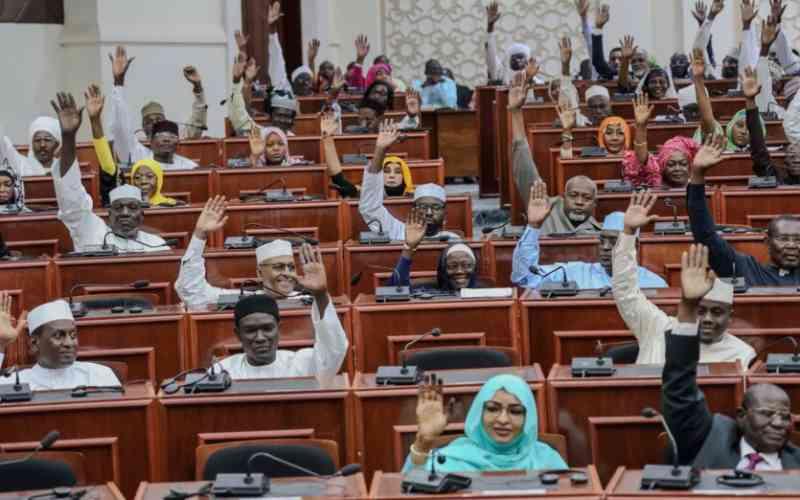
In a significant political shift, Chad’s parliament has voted to abolish presidential term limits, granting Mahamat Déby, who took power after the death of his father Idriss Déby in April 2021, the potential for indefinite rule. This controversial move has sparked widespread debate and raised concerns about the future of democracy in this Central African nation. Critics warn that removing term limits could entrench an authoritarian regime, while supporters argue it is necessary for maintaining political stability amid ongoing security challenges. As Chad navigates this critical moment, the implications of this parliamentary decision are expected to extend beyond its borders, affecting regional dynamics and geopolitical relations in the Sahel.
Chad’s Parliament Removes Presidential Term Limits: Opening Doors for Mahamat Déby’s Prolonged Rule
The recent decision by Chad’s parliament to eliminate presidential term limits has ignited fervent discussions among citizens and international observers alike. This action is perceived as a tactical maneuver aimed at extending Mahamat Déby’s leadership since he assumed control following his father’s demise. Various political leaders have expressed apprehension regarding its impact on democratic governance; many fear it may herald an era of prolonged autocratic rule under Déby.
Supporters contend that lifting these restrictions will promote stability during turbulent times characterized by threats from extremist groups. In contrast, detractors argue that such actions undermine democratic principles and could lead to civil unrest. Analysts have identified several potential outcomes resulting from this legislative change:
- Impact on Opposition Parties: A diminished ability for opposition factions to effectively challenge the ruling government.
- Increased Political Tensions: A higher likelihood of protests and public dissatisfaction.
- Deterioration of International Relations: Strained relationships with Western allies advocating for democratic norms.
Additonally, experts are closely monitoring how this legislative alteration might affect Chad’s counter-terrorism initiatives and internal conflicts. The government’s approach in maintaining order during these changes will be pivotal in shaping the nation’s future trajectory.
Analyzing Political Consequences Following Removal of Term Limits in Chad
The recent repeal of presidential term limits has sent shockwaves through Chad’s political landscape, signaling a possible drift towards autocratic governance under Mahamat Déby’s administration. By eliminating these constraints, parliament has essentially set the stage for indefinite rule-raising serious concerns about democracy’s viability within the country. Observers suggest that such measures may further entrench Déby’s power while stifling political diversity and dissent-potentially escalating tensions both domestically and regionally.
The socio-political environment in Chad is under scrutiny as analysts evaluate several critical factors:
- Potential Rise in Political Instability: The absence of term limits could incite unrest among opposition leaders aiming to contest government authority.
- Evolving Regional Dynamics: An extended tenure for Déby might alter alliances within the Sahel region impacting security strategies significantly.
- Deterioration of Governance Standards: Without regular leadership transitions, there may be stagnation leading toward more authoritarian practices within governance structures.
The international community will likely keep a vigilant eye on how these developments unfold politically within Chad as they shape interactions between governmental entities and citizens alongside external diplomatic relations crucially impacting responses toward this significant political transformation.
Strategies for Democratic Reforms Against Authoritarian Tendencies in Chad
A robust strategy aimed at promoting democratic reforms is essential if rising authoritarian trends are to be effectively curtailed within Chad’s political framework. Both local civil society organizations and international stakeholders must advocate vigorously for reforms fostering inclusive governance structures through measures such as:
- Reinstating Presidential Term Limits: Reinstate constitutional provisions limiting presidential terms which would ensure regular electoral turnover preventing excessive concentration of power.
- Cultivating Judicial Independence: Establish mechanisms protecting judicial processes from governmental interference ensuring fair resolution during electoral disputes.
- < strong >Encouraging Political Diversity:< / strong > Foster multiple party systems enabling diverse perspectives enhancing competition during elections.< / li >
- < strong >Boosting Voter Awareness:< / strong > Launch extensive voter education initiatives targeting marginalized communities encouraging civic participation informed voting practices.< / li >
< / ul >< p >Moreover , facilitating dialogue among various stakeholders including opposition factions civil society organizations remains vital towards achieving sustainable reform . A roadmap outlining steps necessary towards democratization could encompass :< / p >
Conclusion: Navigating Uncertain Waters Ahead< strong >Action< / strong > < strong >Expected Outcome< / strong >
< strong >National Dialogue Initiatives< / strong > Create platforms addressing grievances fostering mutual understanding . < string Collaboration with Global Entities : >Strengthen partnerships monitoring elections safeguarding human rights . In conclusion , Chads recent parliamentary decision abolishing presidential term limits raises profound questions regarding its democratic future . By potentially allowing Mahamat Deby an indefinite extension , it consolidates power amongst ruling elites while posing challenges against pluralism accountability mechanisms . As citizens along with global organizations monitor unfolding events closely , repercussions stemming from legislative changes could echo throughout surrounding regions influencing aspirations toward good governance democracy not only locally but also internationally . Increasing calls demanding transparency adherence fundamental principles amidst evolving circumstances will likely compel greater engagement response efforts by global actors involved .










