
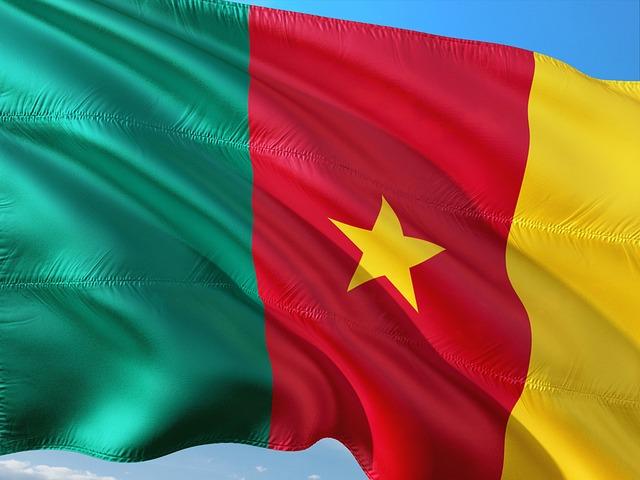
In recent years, the Republic of Cameroon has become a focal point for discussions surrounding colonial legacies and their enduring impacts on national unity. A recent article by Al Jazeera highlights the deep divisions that persist in the country, stemming from its colonial partition that imposed ‘artificial lines’ between regions and ethnic groups. This division not only shaped Cameroon’s geopolitical landscape but also sowed the seeds of conflict and discord among its diverse populations. As the nation grapples with ongoing social unrest and calls for autonomy, understanding the historical context of these borders is essential to comprehending the complexities of Cameroon’s current plight. This article delves into the colonial history that carved up Cameroon,the implications of these divisions,and the challenges that lie ahead as the country seeks a path towards cohesion amidst its fractured identity.
Understanding the Historical Context of Cameroon’s Colonial Partition
The colonial history of Cameroon is marked by the arbitrary decisions of European powers that sought to maximize territorial gains without regard for the ethnic and cultural realities on the ground.The country was initially unified under German colonization from 1884 until World War I, when it was seized by allied powers. Following the war, Cameroon was divided between the British and the French, leading to a bifurcated administration that would have lasting repercussions.This partition created artificial boundaries that fragmented the populace, disrupting longstanding social structures and intercommunity relations.
The imposition of colonial rule established a system that prioritized administrative control over cultural coherence. Regions such as the Anglophone Northwest and Southwest were aligned under British oversight, while the Francophone majority became part of French mandates. Key historical events included the Anglo-French Agreement of 1919 and subsequent political developments that further entrenched these divisions. The legacy of colonialism can be observed today through ongoing tensions in the form of demands for autonomy by Anglophone regions, highlighting the profound impact of colonial partition and the challenge of achieving national unity in a diverse society.
Analyzing the Impact of Colonial Borders on National Unity and Identity
The enduring legacy of colonialism has left an indelible mark on Cameroon, where the borders drawn by colonial powers have contributed to profound divisions that challenge the notion of a cohesive national identity. The artificial lines that separate regions such as the English-speaking Northwest and Southwest from the predominantly French-speaking areas have fostered a sense of estrangement among the populace.This has culminated in political unrest and a struggle for self-determination among Anglophone communities, who feel marginalized and disconnected from the central government. The divide intersects not only with language but also with cultural, economic, and social disparities, further complicating efforts toward unification and peace.
Efforts to foster national unity are often stymied by the historical narratives that continue to serve different groups. The consequences of colonial partition manifest in various ways, including:
- Socioeconomic Disparities: Unequal distribution of resources and developmental aid based on colonial delineations.
- cultural Fragmentation: Distinct cultural practices and languages lead to a lack of mutual understanding and respect.
- Political Tensions: Anglophone and Francophone regions often exhibit contrasting political agendas, complicating governance and policy-making.
These factors underscore the urgency of addressing the historical context of colonial borders in order to pave the way for genuine dialog and reconciliation. Constructing a national identity that transcends these colonial legacies is critical for fostering stability and collaboration among Cameroonians and ultimately moving beyond the confines of these imposed demarcations.
Strategies for Reconciliation and Sustainable Development in a divided nation
To foster reconciliation and sustainable development in a nation entrenched in division, stakeholders must prioritize a multi-faceted approach that includes both grassroots initiatives and government policies. Community engagement is crucial; local leaders should be empowered to mediate conflicts and facilitate dialogue among divided groups. This effort can be bolstered by establishing forums for open discussion, where citizens can express grievances and aspirations in a constructive environment. By promoting cultural exchanges and educational programs that highlight shared histories and values, communities can work together towards a common identity that transcends imposed divisions.
moreover, intentional economic development strategies should be employed to bridge the gaps that have emerged from historical partitioning. Initiatives such as cooperative business ventures can encourage collaboration across communities, generating economic interdependence that fosters peace. The establishment of infrastructure projects that span divided regions is also key, ensuring equal access to resources and opportunities. A complete matrix of these strategies might look like this:
| Strategy | Purpose | Impact |
|---|---|---|
| Community Forums | Facilitate dialogue | Build trust and understanding |
| cultural Exchanges | Promote shared identity | Create unity through diversity |
| Cooperative Ventures | Economic interdependence | Reduce tensions through collaboration |
| Infrastructure Projects | Enhance connectivity | Equal access to resources |
In Conclusion
the enduring divisions that define Cameroon are a poignant reminder of the legacies of colonialism and the arbitrary boundaries imposed upon nations. As the country grapples with the complexities of its linguistic, cultural, and historical divides, the need for a reconciliatory approach becomes increasingly urgent.The dialogue surrounding these ‘artificial lines’ is not merely an academic exercise but a crucial step towards fostering unity in a nation marked by its rich diversity. As Cameroon stands at a crossroads, the choices made today will determine whether its vibrant tapestry can be woven together into a cohesive narrative or remain frayed at the edges. Recognizing the past is essential, but it is indeed the future that must be shaped by a commitment to inclusivity and understanding. Only then can Cameroon hope to heal and move forward as a truly united nation.










